
How each gate works
Swing gates
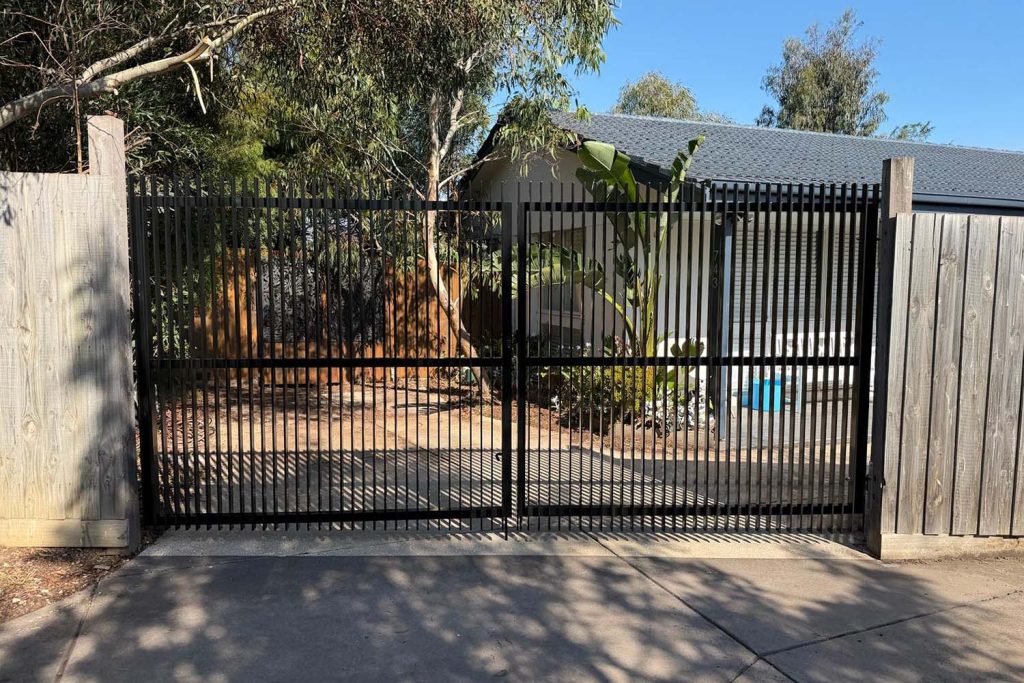
A swing gate opens by rotating on hinges — just like a very large door. Single swing gates rotate to one side. Double swing gates have two panels that open outward (or inward) from the centre.
Swing gates are the classic residential choice. They suit most standard driveways and give a property a clean, considered entrance. Automated swing gates use a linear actuator or underground motor to open and close.
Sliding gates
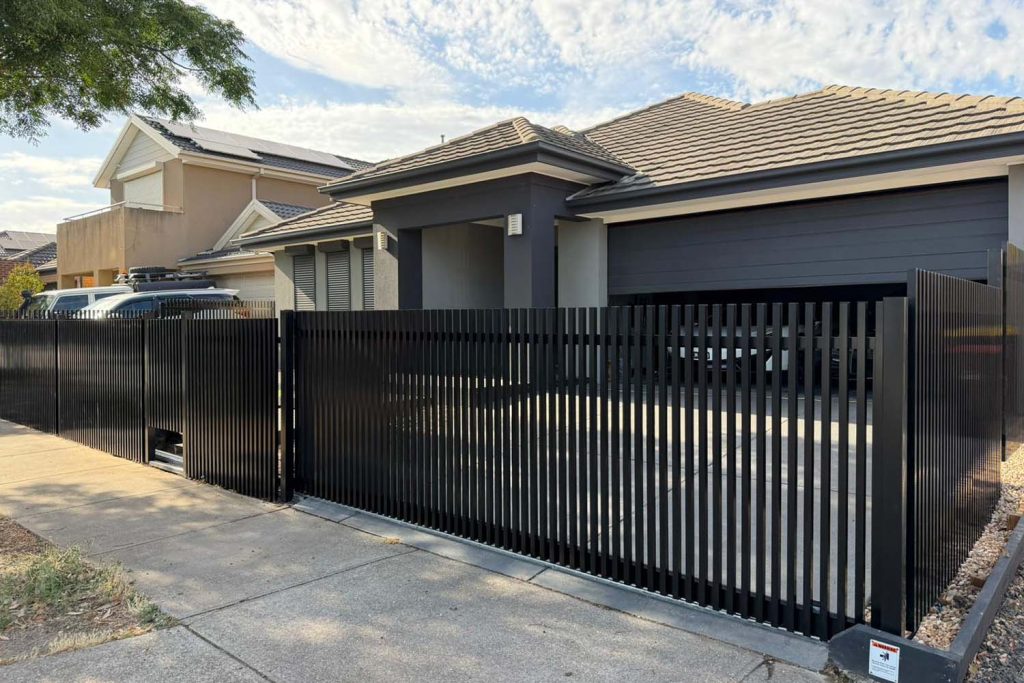
A sliding gate travels sideways along a track or cantilever system rather than swinging outward. It disappears along the fence line as it opens, keeping the full driveway width clear.
There are two types of sliding gate. A track-mounted gate runs on a ground rail. A cantilever gate is supported entirely from one side — it glides without touching the ground, making it ideal where a ground track isn’t practical.
Which gate type is right for your driveway?
Choose a swing gate if:
- Your driveway is flat or has a very gentle gradient
- There is clear space in front of the gate (outside the property) or behind it (inside) for the panels to swing into when open
- Your opening is up to approximately 5–6 metres wide for a double gate
- You prefer the classic look of a hinged entrance
Choose a sliding gate if:
- Your driveway slopes — a swing gate on a slope creates a gap at the bottom and can bind on the ground as it opens
- Space at the entrance is limited — the gate travels sideways rather than outward
- Your opening is wider than 5–6 metres and a double swing gate would feel too large
- You want a cantilever system that requires no ground track and minimal maintenance
What about cantilever vs track-mounted sliding gates?
If you’ve decided on a sliding gate, the next question is whether to use a track or a cantilever system.
A track-mounted gate requires a ground rail the full width of the opening, plus run-back space beside the driveway. It’s a solid, cost-effective option for flat ground.
A cantilever gate has no ground track. The gate is supported by counterbalanced rollers attached to posts on one side only. It’s better suited to uneven or sloped ground, requires less maintenance over time, and works in conditions where a ground track would fill with debris or ice.
Ten66 manufactures both. During your project assessment we’ll review your site conditions and recommend the right configuration.
What if I’m not sure?
If you’ve decided on a sliding gate, the next question is whether to use a track or a cantilever system.
A track-mounted gate requires a ground rail the full width of the opening, plus run-back space beside the driveway. It’s a solid, cost-effective option for flat ground.
A cantilever gate has no ground track. The gate is supported by counterbalanced rollers attached to posts on one side only. It’s better suited to uneven or sloped ground, requires less maintenance over time, and works in conditions where a ground track would fill with debris or ice.
Ten66 manufactures both. During your project assessment we’ll review your site conditions and recommend the right configuration.